


Dry lining significantly speeds up the finishing process by removing the necessity for wet plaster to dry, allowing your project to progress without unnecessary delays.





Experience counts when it comes to dry lining in Hayes, and we deliver solid, efficient results every time.
Get a free quote
 Quick, no-obligation quote!
In Hayes, dry lining is perfect for new construction and extension projects where speed and precision are essential. The method allows for rapid installation of interior walls and ceilings, eliminating the wait for plaster to dry. Careful measurements and robust frameworks ensure a clean, durable finish that aligns with your build’s timeline and quality needs.
When upgrading spaces in Hayes, dry lining provides an effective way to create smooth, even surfaces over old walls or irregular structures. Compared to traditional plastering, this technique minimizes disruption and mess. We handle dry lining with precision, ensuring that joints are correctly taped and skimmed, creating a surface that is ready to paint and meets refurbishment standards.
Dry lining is suitable for both large-builder projects and individuals seeking hassle-free interior finishing in Hayes. Our extensive experience as subcontractors ensures clear communication and adherence to timelines. Whether we’re working on-site or in your home, our dry lining offers a practical, lasting completion tailored to your exact requirements.
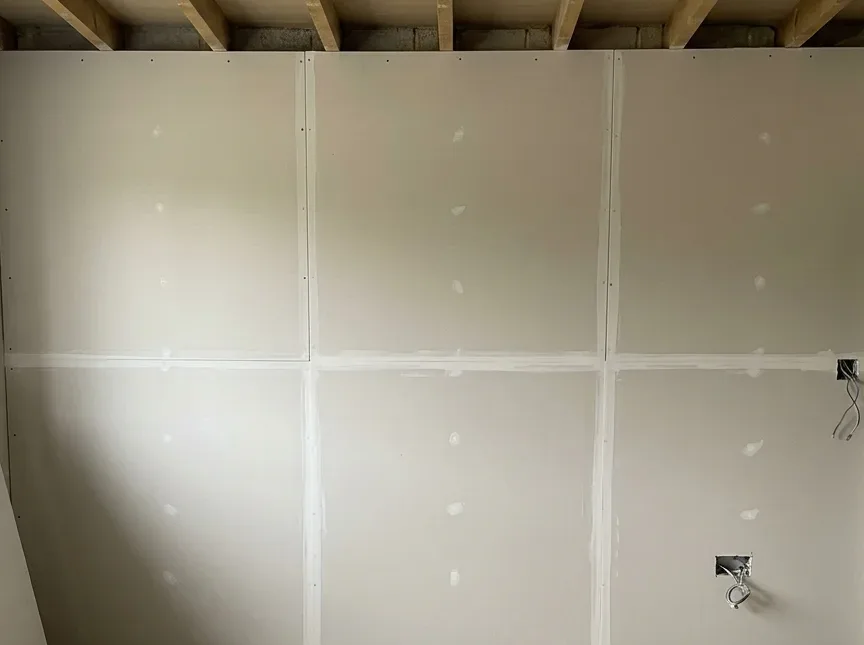
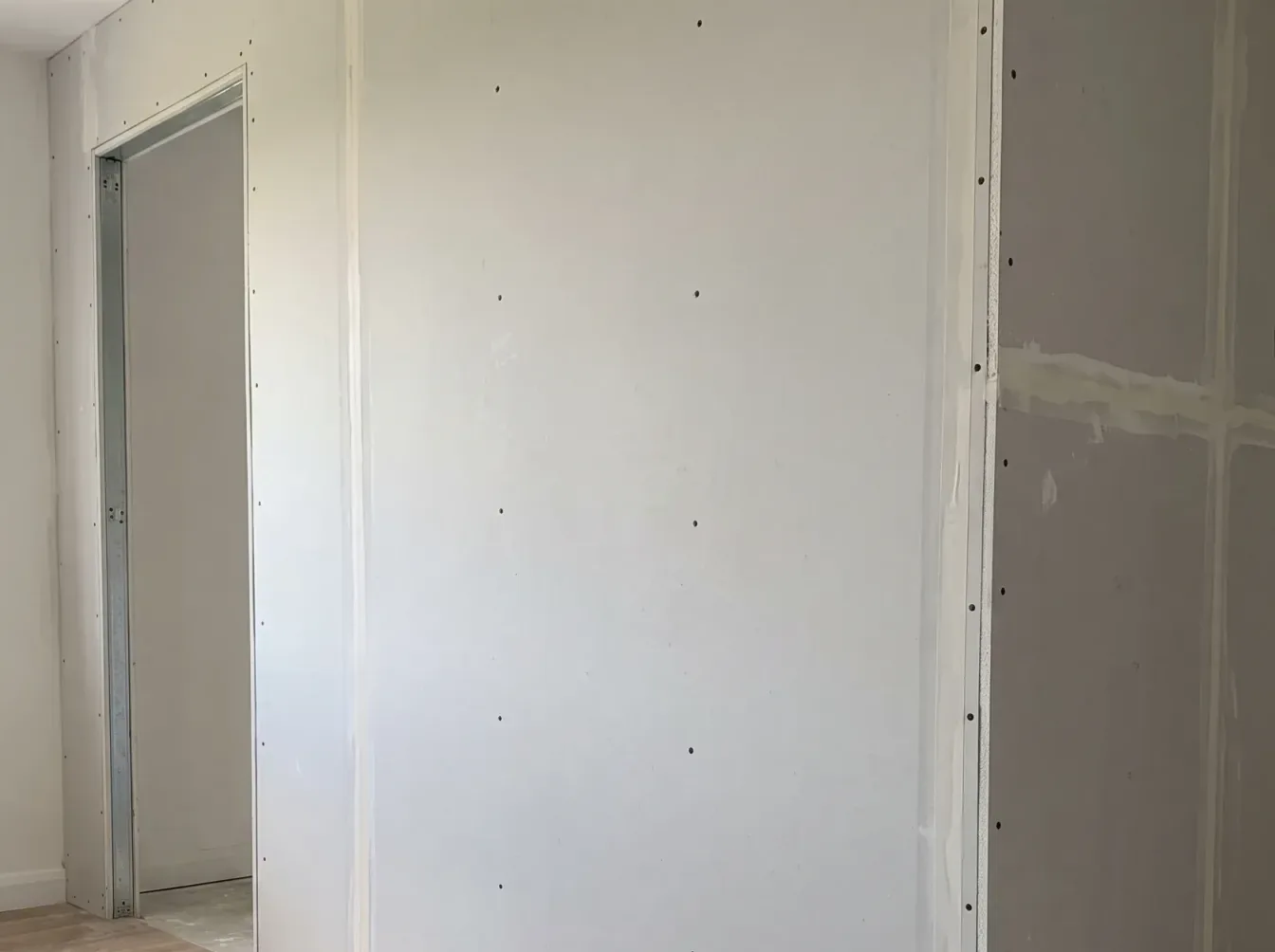
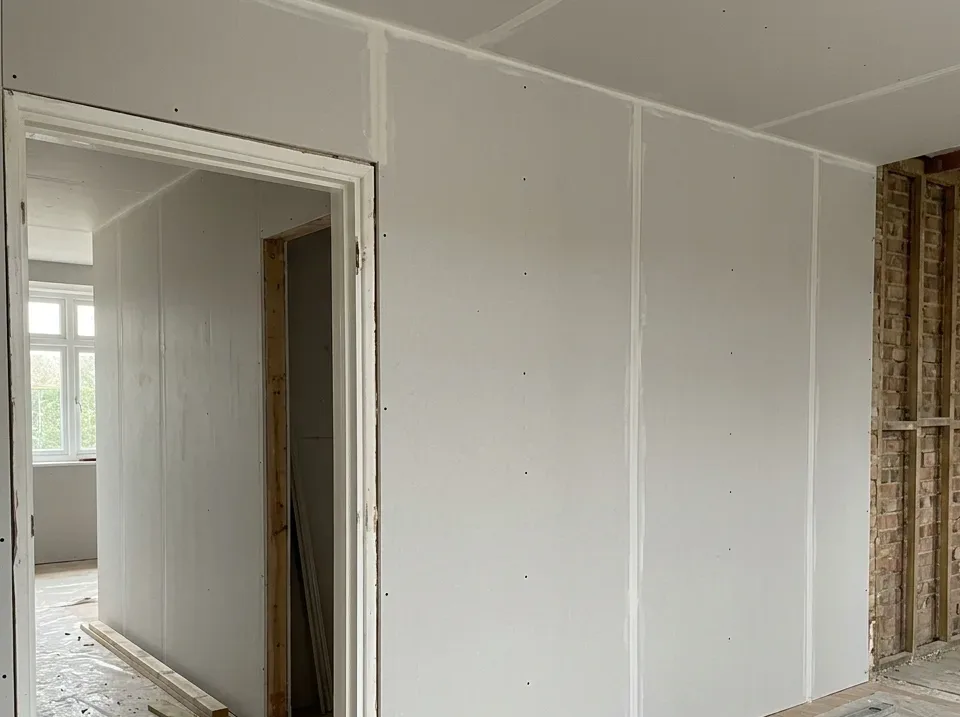
Our dry lining work in Hayes involves walls and ceilings in new builds, extensions, and renovation projects. We install plasterboard onto timber or metal frameworks, guaranteeing precise fitting for each specific space. This approach accelerates the finishing phase and circumvents moisture issues associated with traditional plastering. Our dry lining service adapts seamlessly to various project types, consistently delivering reliable outcomes.
We begin our dry lining projects in Hayes with a comprehensive site survey and measurement to ensure a perfect fit. Following this, we install a solid framework before methodically attaching plasterboard sheets. Joints and screw heads are taped and filled to produce a smooth surface that’s ready for decoration. With two decades of experience, we ensure clean lines and durable finishes that satisfy builders and individual clients alike.
Dry lining significantly speeds up the finishing process by removing the necessity for wet plaster to dry, allowing your project to progress without unnecessary delays.
This technique results in plasterboard being secured precisely, with joints taped or skimmed to ensure smooth walls and ceilings that are always ready to paint.
Unlike traditional plastering, dry lining reduces moisture-related challenges, which is especially important during renovation work where controlling dampness is vital.
This method is effective in new builds, extensions, and renovations, adapting effortlessly to various project requirements and structural conditions.
When used with insulation materials, dry lining enhances thermal and acoustic performance, increasing comfort and efficiency in the finished area.
The process involves less mess and drying time on-site, keeping your work area cleaner and promoting an efficient workflow.
We commence our dry lining projects with accurate site surveys and measurements, ensuring that each panel fits flawlessly, preventing expensive adjustments later on.
With over 20 years in the trade, we assure that our dry lining work is completed on time and meets specifications. We maintain open communication to keep you updated throughout each stage.
Dust settles everywhere during boarding. You need to clear old furniture, carpets and loose timber off the subfloor so installers can position their stepladders safely without catching cables underneath. In properties booking dry lining in Hayes, moving personal belongings to an adjacent dry bedroom prevents accidental scuffs from wide gypsum sheets.
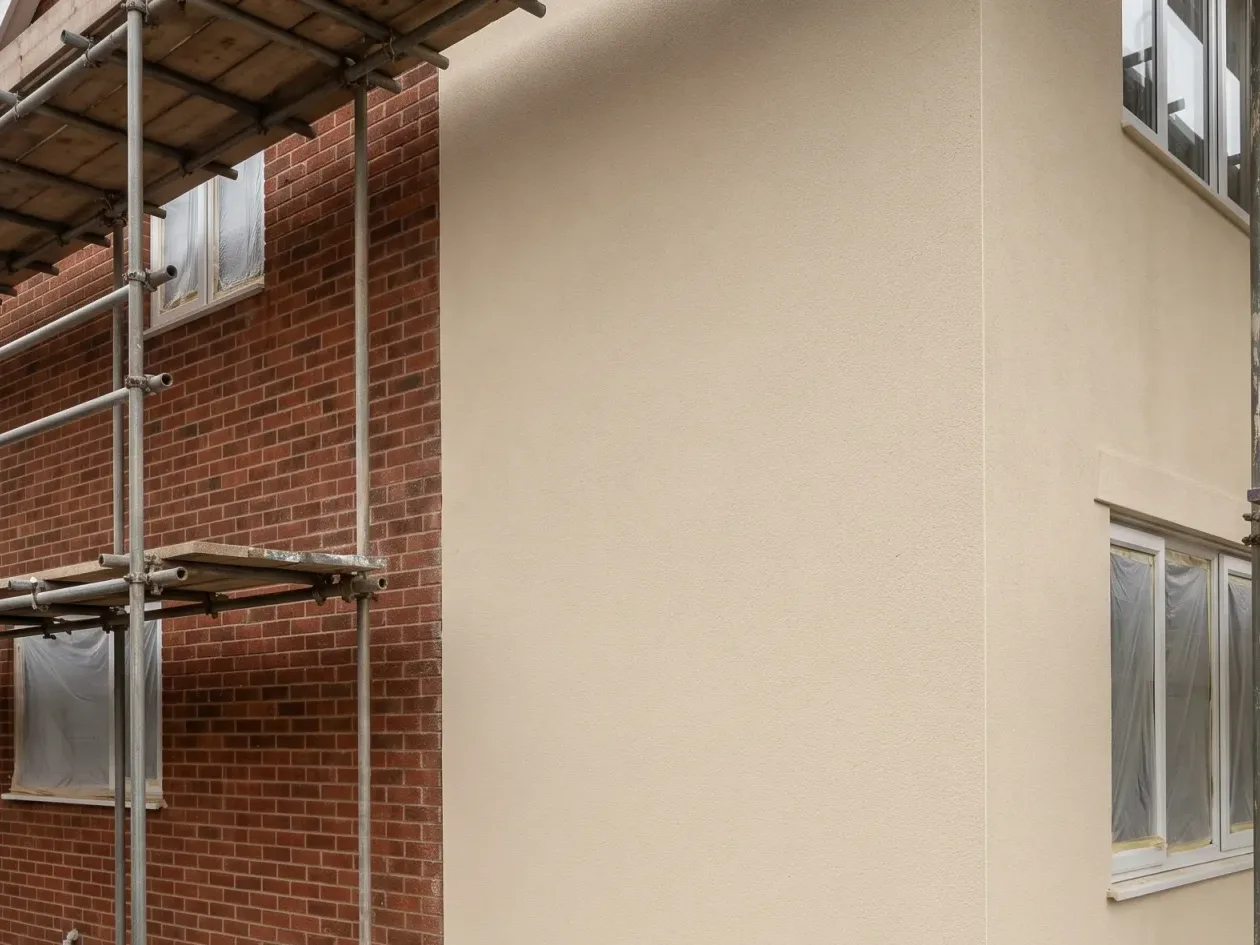
Mortar lines must stay dry. If rainwater still enters through cracked exterior render or unsealed window flashings, fixing internal cladding will trap damp inside the wall cavity and rot the battens. A builder should seal loose masonry before boards get screwed tight against external walls.
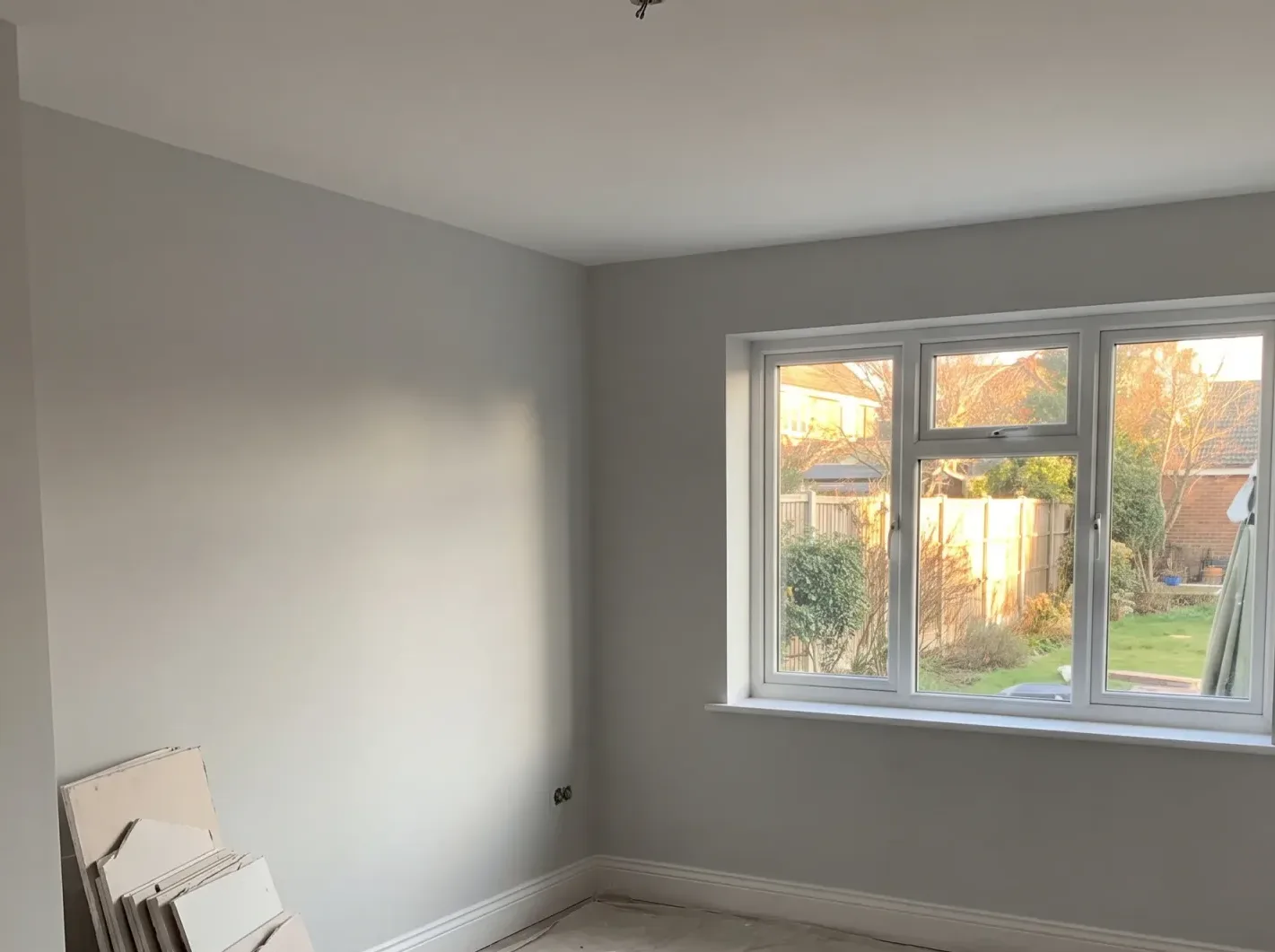
Every dry lining project we undertake starts with a detailed site survey and accurate measurements to effectively plan and guarantee a proper fit for plasterboard installation.
Next, we construct a sturdy timber or metal framework tailored to the specific needs of the walls or ceilings involved.
Once the framework is established, we carefully attach plasterboard panels, focusing on alignment and stability to ensure a smooth surface.
After affixing the boards, we meticulously tape joints and fill screw heads to create a seamless finish ready for painting or decoration.
We finalize the dry lining process with a thorough inspection to confirm quality and durability, ensuring our clients are satisfied before closing the project.
Copper pipes require careful positioning. When completing dry lining in Hayes, plumbers have to clip waste pipes flush behind the stud track, because a screw protruding past the metal flange will easily puncture plastic supply lines hidden directly behind unskimmed boards. We double-check each manifold before closing the wall up, leaving copper tails poking through neat round holes for kitchen sink hookups.
Back boxes demand precise depth. Electricians must pull cabling through grommets in the metal uprights rather than draping loose wires over raw track edges where sharp zinc steel can slice through outer insulation. Our crew marks every back box location on the floorboard with blue chalk.
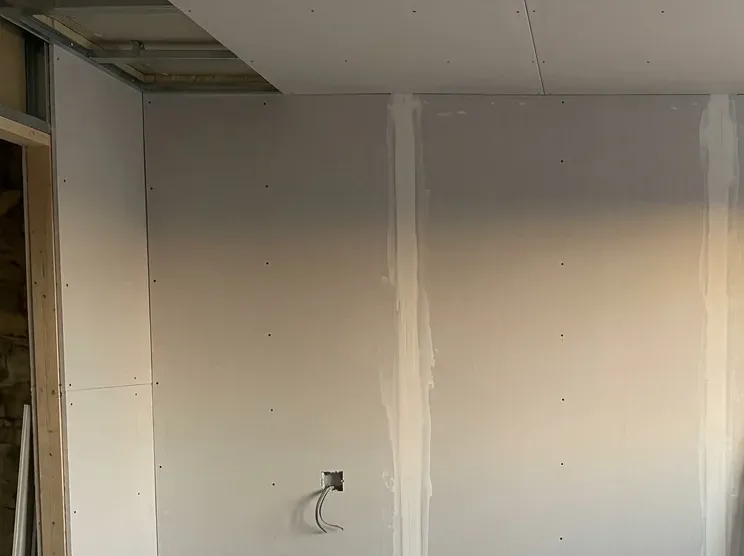
Standard rawlplugs will fail here. Heavy radiators or solid timber shelves pull straight out of unbacked plasterboard unless fixed directly into the underlying timber studs with zinc-plated coach screws. Homeowners choosing dry lining in Hayes often ask us to mark stud centres across skirting lines with carpenters pencil.
Moisture ruins fresh core gypsum. Cooking without switching on extractor fans allows steam to condense against cold corners, softening board joints over time. Keep trickle vents open in bathrooms so natural airflow carries heavy warm vapour away from taped ceiling seams.
Doorknobs punch hollow holes easily. Moving a double mattress upstairs can gouge the core if sharp bedframe corners clip hallway corners during deliveries. A small tub of jointing compound and scrap mesh scrim tape smooths deep dents flat without stripping entire partition sheets.
With two decades in the business, we focus on precision and durability for dry lining. Each job begins with careful measurements for a perfect fit of the plasterboard. Using a solid framework, we tape and fill joints to produce a smooth, ready-to-finish surface. Our hands-on experience provides a reliable finish built to withstand time, whether it’s a new build or a renovation.
We keep the dry lining process straightforward and transparent, collaborating closely with builders and individual clients. Communication is key at every stage-from the initial survey and free quotation to final sign-off. This methodical approach minimizes onsite delays and guarantees the dry lining satisfies the precise needs of each project without surprises.
Contact in Hayes. We operate in Hayes and the surrounding area, providing our dry lining service with local expertise. You can reach us by phone for a free estimate, and we’ll happily visit your site.
approx. 25 milesDistance from our base · Cheshunt
Call us07465266721Email uscontact@topplastering.ukWe serve your areaHayes and the surroundings
The Google map loads after you accept marketing cookies.


Maksymilian Mazur
Very satisfied with the service! Excellent communication, clean workmanship, and everything completed professionally. Highly recommended!
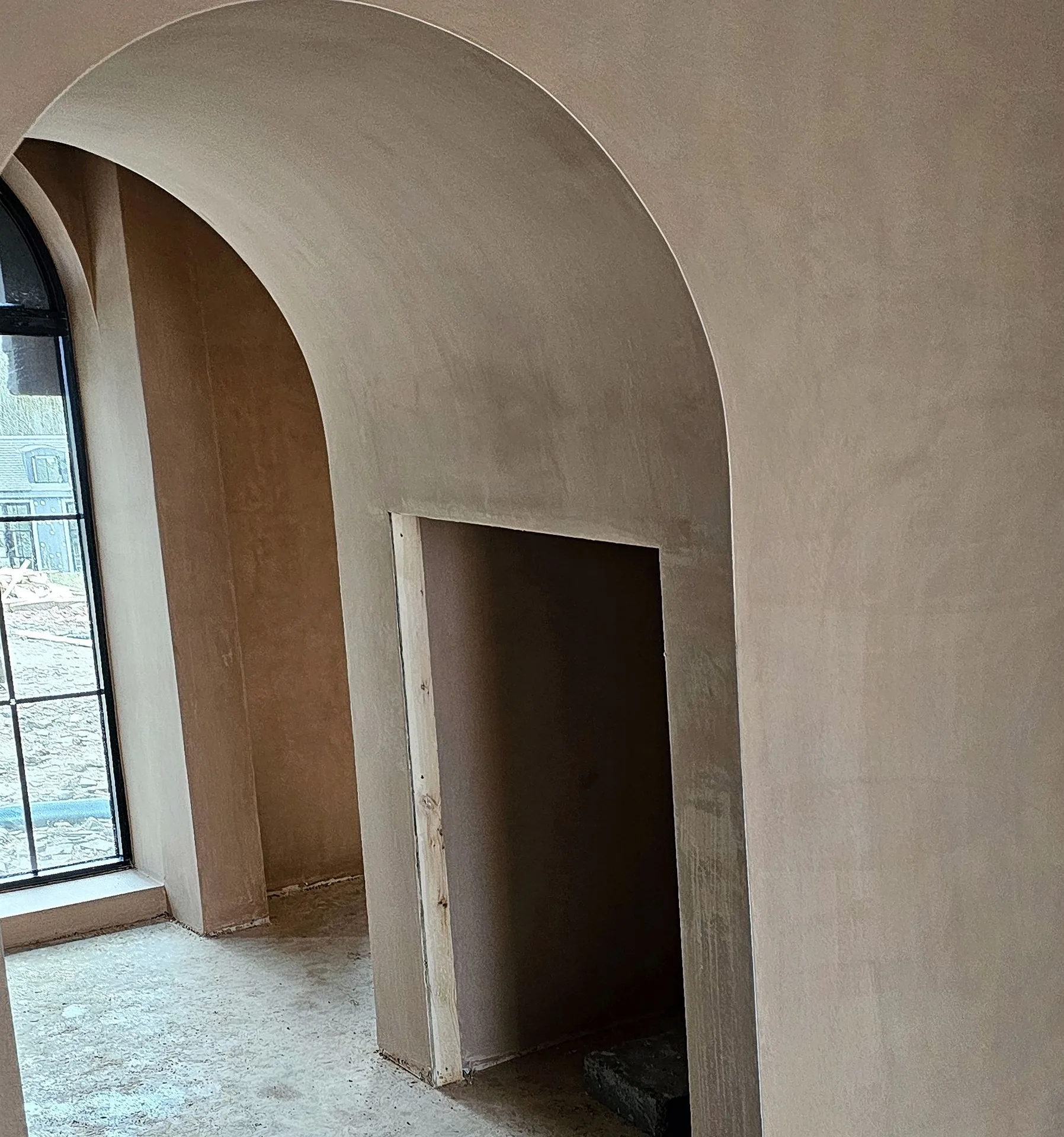
Tired walls and ceilings get a second life with skimming, giving you a flawless, durable finish every time.
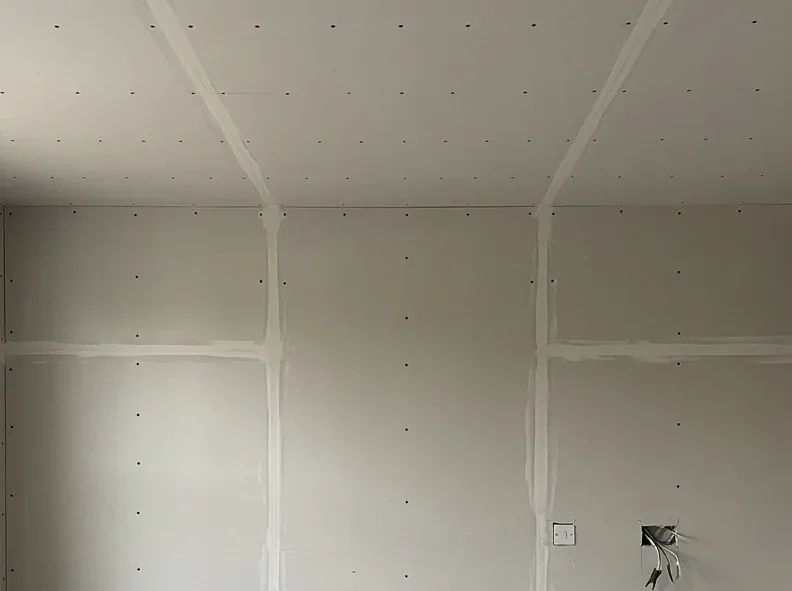
Experience matters-Topplastering handles plasterboarding for walls and ceilings so you get a truly solid finish.
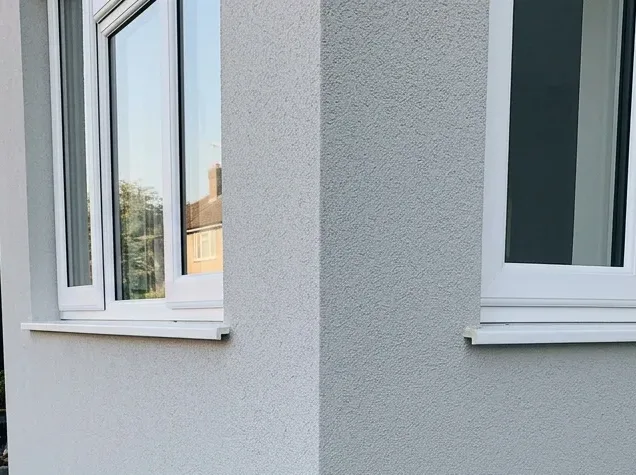
Rendering covers exterior and interior walls with a solid, even coat, protecting surfaces from weather and everyday wear.
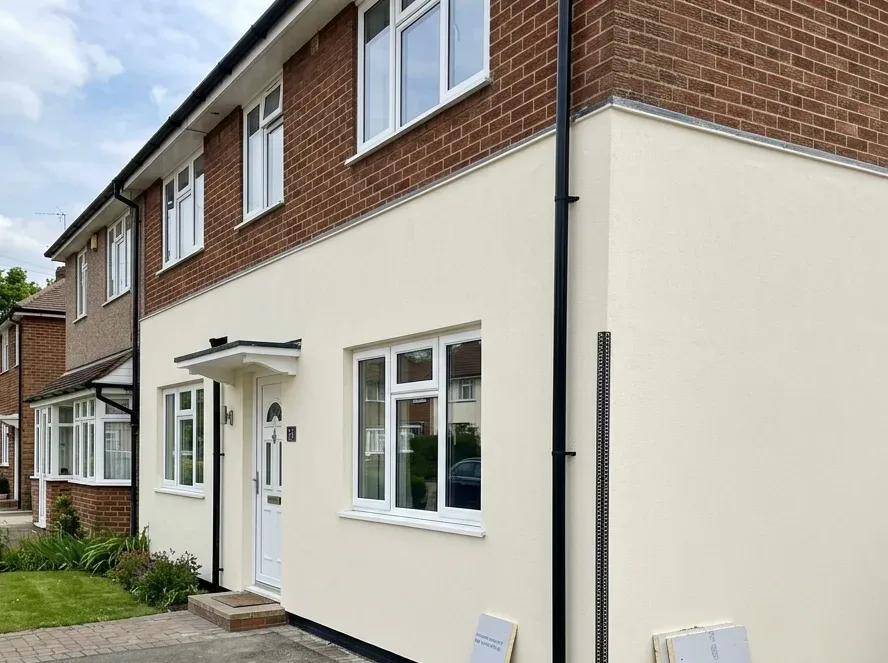
Upgrade your property with external wall insulation from Topplastering-cutting heating costs and improving your building’s appearance permanently.
Craftsmanship you can see
Every plastering project we complete leaves walls smooth, durable, and ready for whatever comes next.
Check whether they ask about plumbing runs before quoting. A reliable tradesperson inspects floor joists for levelness, checks window reveals for true right angles, and requests trade references instead of rushing to quote sight unseen over the phone.
Freezing conditions stop water-based adhesives from curing on brickwork. When temperatures drop close to freezing, adhesive dabs lose adhesion and joint compounds take days to dry out, so contractors usually bring fan heaters onsite before fixing sheets.
The crew surveys existing bare walls, verifies first-fix pipes, fits framework tracks, fixes insulation rolls, screws plasterboards up, and tapes joints flat for dry lining in Hayes projects. Decorators then take over the clean dried surfaces.
It depends on whether you attach framing directly to shared dividing brickwork. Working on party walls often requires written notifications under boundary rules, particularly when removing old plaster or drilling steel anchors into adjacent property structures.