



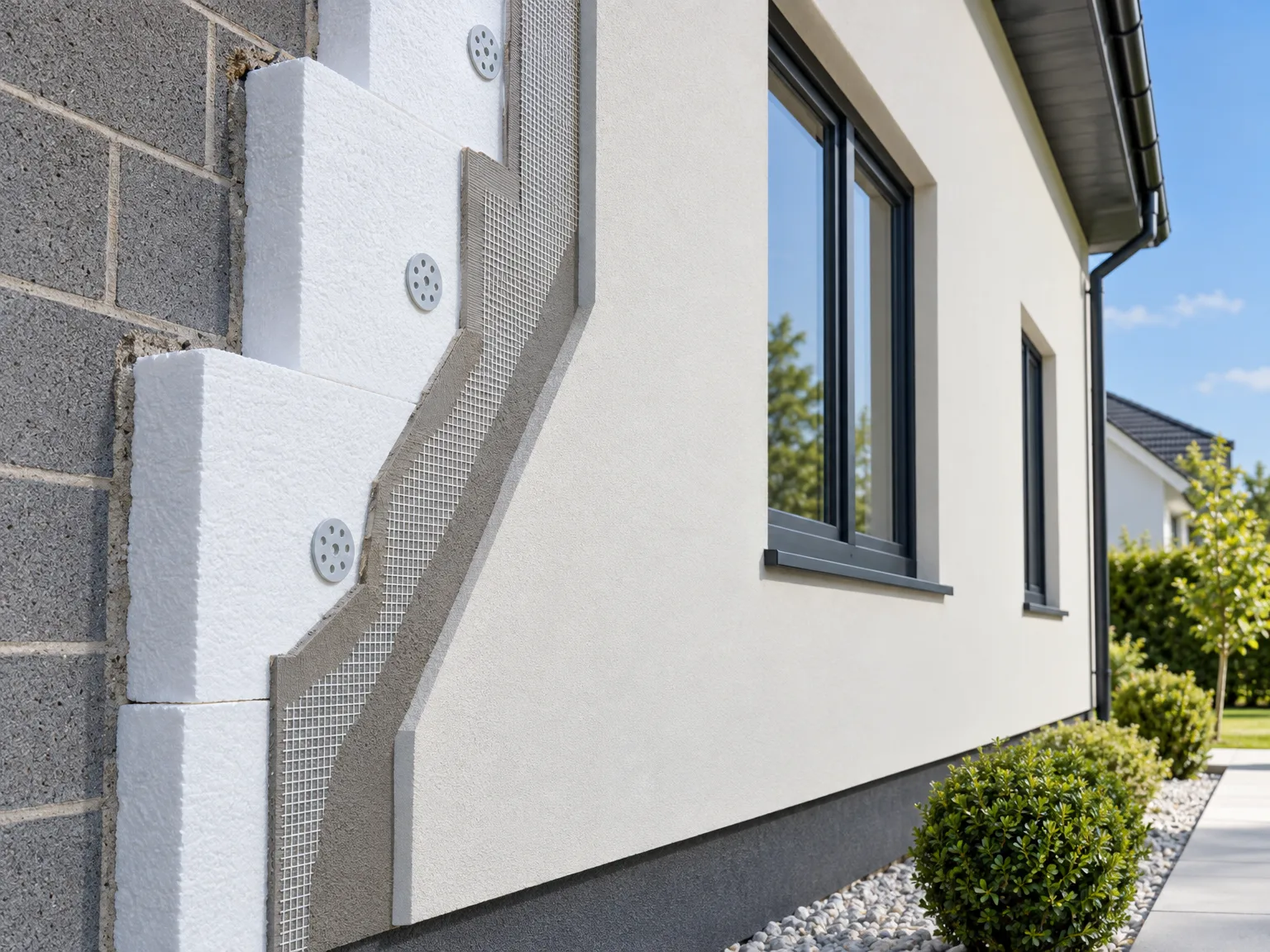
Why External Insulation Installation Demands Precision
Installing external insulation is not simply a matter of fixing boards and applying render. Every decision - from initial substrate assessment to the final render coat - carries consequences that compound over time. A poorly evaluated surface, an incorrectly fixed board, or a rushed render joint does not merely create a cosmetic flaw; it opens a pathway for moisture, cracking, and thermal failure that can remain hidden for years before causing serious damage.
Where Shortcuts Become Costly
Precision matters at each distinct stage:
- Substrate assessment determines whether the wall can support the system without delamination risk.
- Board fixing and joint sealing must eliminate gaps that allow moisture to migrate behind the system.
- Render selection must match the wall's breathability and local exposure conditions.
Built to Last Decades
Experience diagnosing varied substrates is what separates a system that protects a building for decades from one that fails quietly and expensively.
What External Insulation Actually Does to Your Walls
Think of your walls as a sandwich. The insulation boards form the middle layer-bonded to the external surface and sealed beneath a protective render finish. Together, they create a continuous thermal envelope around the building, closing the gaps where heat quietly escapes and weather gradually damages masonry.
More Than Just Warmth
Installing external insulation does several things at once:
- Reduces heat loss through walls, keeping interiors warmer in winter and cooler in summer
- Shields brickwork and blockwork from freeze-thaw cycles, driving rain, and UV exposure
- Prevents cold bridging at wall junctions, where heat loss is otherwise concentrated
A Protected Structure, Inside and Out
By moving the thermal barrier to the outside, the wall structure itself stays warmer. This limits condensation risk within the masonry and extends the lifespan of the underlying substrate-provided the system is installed correctly from the start.
Substrate Assessment: The Foundation of Every External Insulation Project
The external wall is not a blank canvas. Before a single board is fixed, a thorough assessment of the existing substrate determines whether the project will stand the test of time or fail within seasons. Porosity, surface condition, and moisture behaviour all influence which insulation product and render system will actually perform in that specific context.
Porosity and Surface Condition
A wall that absorbs water unevenly-or repels it entirely-will behave differently under boards and render. Identifying these characteristics upfront allows the installer to select appropriate primers, adhesives, and system components rather than discovering problems mid-installation.
Moisture Behaviour Shapes Every Decision
Moisture trapped behind an external insulation system causes delamination, cracking, and gradual loss of thermal performance. Detecting existing damp patches, rising moisture, or penetrating water before work begins is not a preliminary formality-it is the decision point that separates a system built to last from one that quietly deteriorates.
How Skipping Preparation Causes External Insulation to Fail
Every external insulation system stands or falls on what happens before the first board is fixed. When the substrate is not properly assessed for porosity, surface condition, and moisture behaviour, the layers above have nothing reliable to bond to. The result is predictable: delamination, cracking, and water finding its way through gaps that should never have existed.
Moisture Always Finds a Way
A damp or poorly prepared wall traps moisture behind the insulation layer rather than allowing it to escape. Over time, this forces boards apart, degrades adhesion, and undermines the entire thermal barrier-turning a long-term upgrade into a cycle of remedial work.
Cutting Corners Costs More Later
Proper substrate preparation is foundational. Skipping it may appear to save time on the day, but the consequences-failed render, compromised weather resistance, and loss of insulating properties-are far more disruptive and costly to address once the system has already been installed.
Board Fixing and Joint Sealing in an External Insulation System
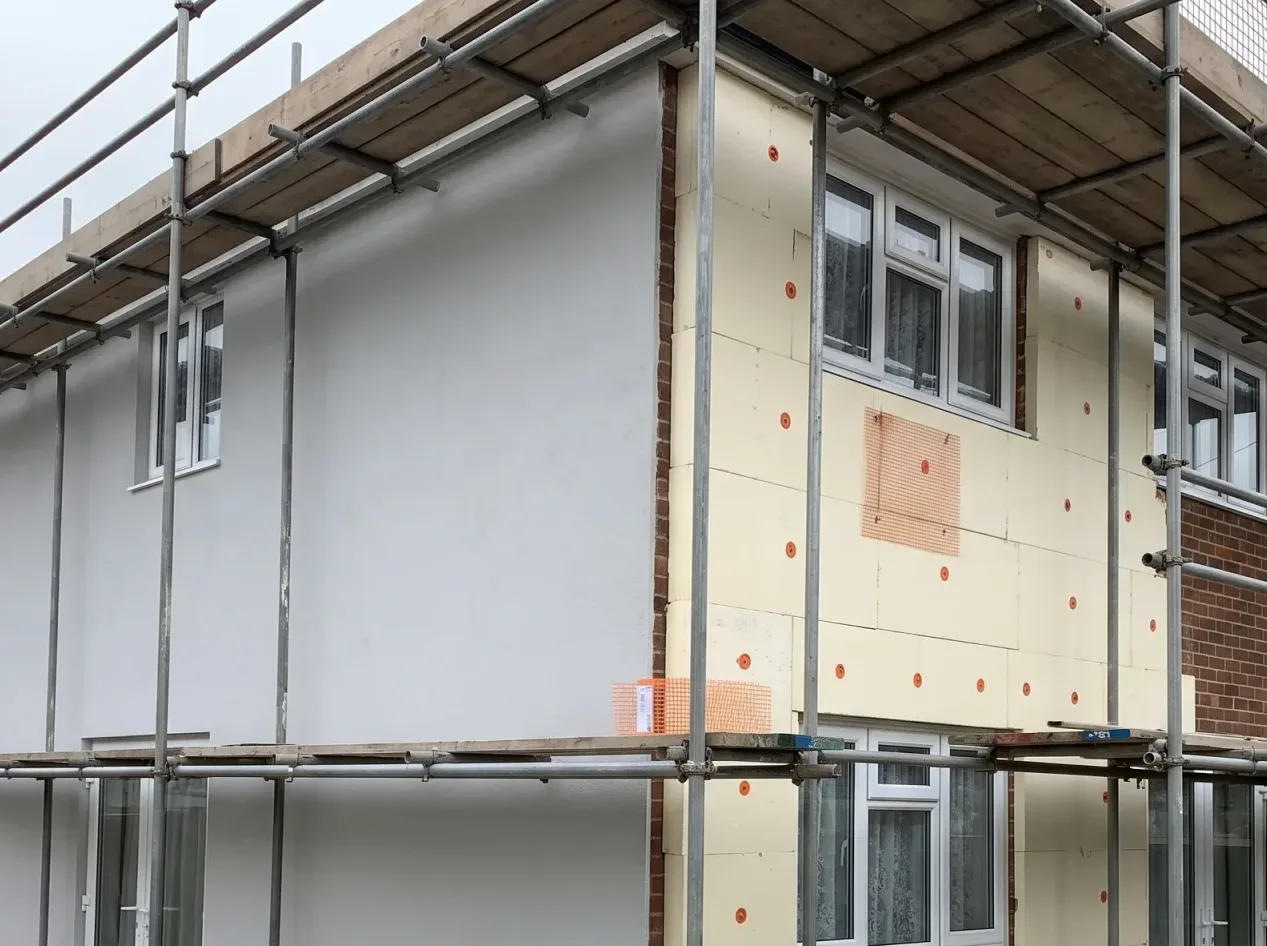
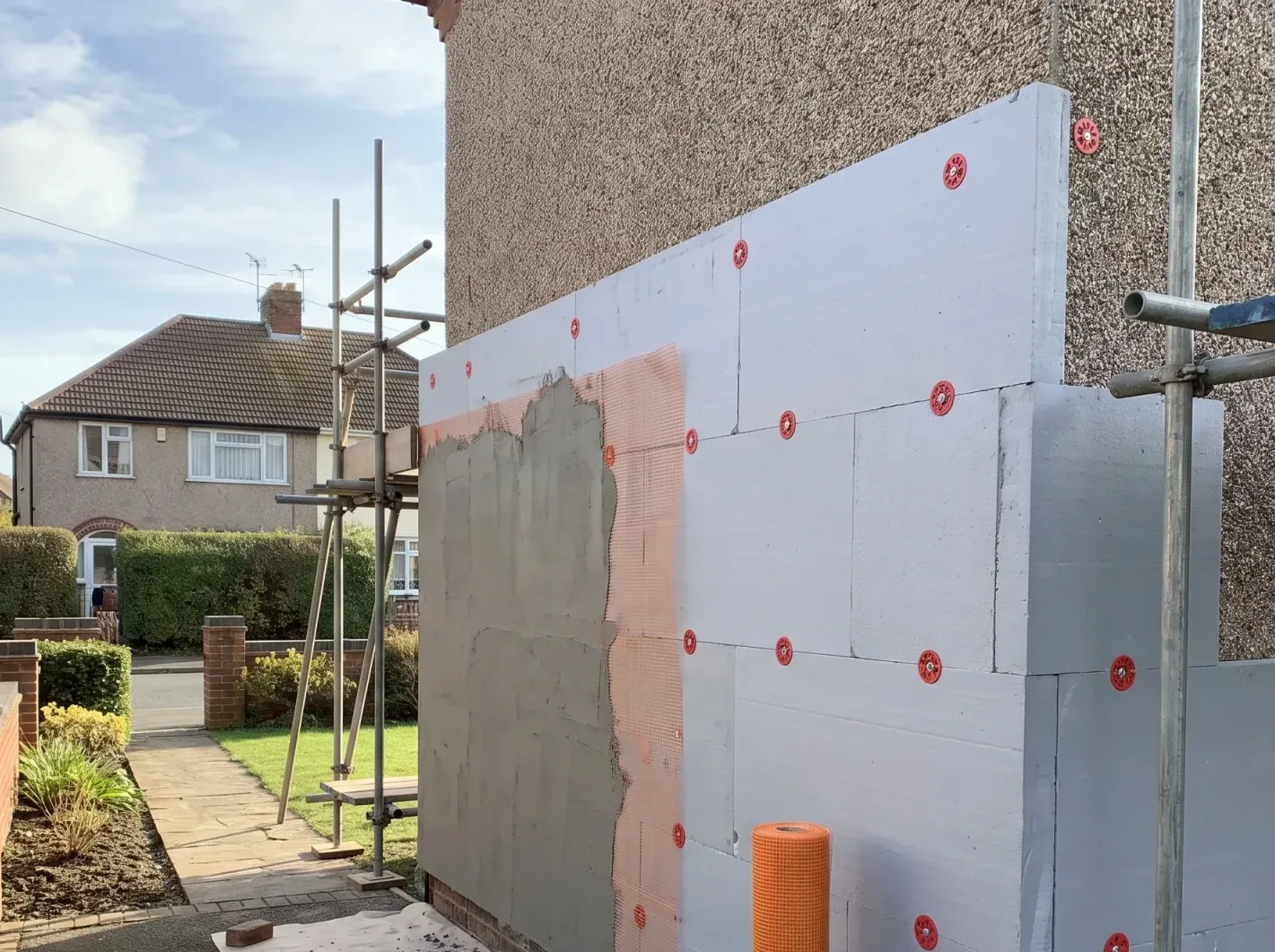
Every board must be fixed using both adhesive and mechanical anchors - neither alone provides adequate hold. Placement matters too: boards arranged in a running bond pattern eliminate continuous vertical joints, which are the primary weak points where thermal bridging takes hold. Any gap, however small, gives cold air a direct route past the thermal barrier.
Why Joint Sealing Cannot Be Skipped
In an external insulation system, the joints between boards require just as much care as the boards themselves. Unsealed or misaligned joints allow moisture to travel behind the system and reach the substrate beneath. Key practices include:
- Staggering joints so no two rows align vertically
- Sealing edges, openings, and penetrations with mesh and adhesive
- Reinforcing corners and reveals with angle beads before render is applied
When Shortcuts Become Defects
Careless fixing may appear sound at first but fail quickly under repeated rain and wind exposure. Delamination, cracking, and damp ingress nearly always trace back to poor board fixing or inadequate joint sealing at the original installation stage.
Choosing the Right Render for External Insulation Performance
The render layer is far more than a cosmetic finish - it is the final line of defence against moisture, wind, and thermal stress. Matching the render to the wall type and exposure conditions is as critical as any earlier stage of installation.
Breathability vs. Weather Resistance
Silicone render suits high-exposure elevations: it sheds water effectively while remaining flexible enough to resist cracking over time. Lime render, by contrast, prioritises breathability, making it the natural choice for older or solid-wall buildings where moisture management is essential. Monocouche and K Rend occupy a practical middle ground - durable, workable, and widely compatible with modern external insulation systems.
A Technical, Not Stylistic, Decision
A mismatch between render and substrate can trap moisture, accelerate delamination, and quietly undermine the insulating properties the entire system was designed to deliver. The choice of render must follow a careful assessment of wall behaviour, not simply aesthetic preference or what happens to be available on site.
Breathability, Flexibility, and Render Choice in External Insulation
The render you choose does more than protect the surface - it determines whether the entire system breathes, flexes, and lasts. Silicone, lime, K Rend, and monocouche renders each behave differently under the same exposure conditions. Getting this choice wrong means the finish cracks, moisture becomes trapped, and the insulation layer beneath gradually loses its effectiveness.
Why Breathability Matters
A wall that cannot release moisture vapour will accumulate it - particularly with older masonry, which naturally holds and releases moisture. A breathable render allows vapour to escape without compromising weather resistance, keeping the wall dry from the inside out.
Flexibility and Long-Term Performance
Buildings move. Thermal expansion, settlement, and seasonal shifts all place stress on external insulation finishes. A render with insufficient flexibility will eventually crack at joints and junctions - precisely where moisture ingress begins. Matching the system to the substrate's movement characteristics is not a cosmetic decision; it is a structural one.
How Moisture Finds Its Way Through Poorly Installed External Insulation
Water is a patient adversary. Even a small gap in board adhesion or an unsealed joint at a window reveal gives moisture a foothold - and once inside the system, it works silently, saturating boards and degrading their thermal properties over time. Imprecise workmanship doesn't just create cosmetic problems; it undermines the entire purpose of external insulation from within.
Joints and Boards as Entry Points
When boards are bonded unevenly or joints left unsealed, capillary action draws water deep into the build-up. The damage is invisible at first - moisture collects behind the render, weakening adhesion and softening the insulation core long before any surface crack appears.
Openings and Edges - Highest Risk
Window reveals, door surrounds, and sill junctions demand meticulous detailing. Without proper sealing at these transitions, water channels directly to the substrate beneath, bypassing the protective layer entirely and accelerating structural deterioration far faster than the surface condition would ever suggest.
Cracking, Delamination, and Other Signs of Imprecise External Insulation Work
When render begins to crack or pull away from the wall, it rarely signals an isolated surface problem. These are symptoms of deeper installation failures - ones that accumulate silently before becoming visually obvious.
How Defects Begin
Poor substrate preparation, inadequate board fixing, and rushed joint sealing all create weak points within the system. Once moisture finds its way through, the cycle of deterioration accelerates. Common signs of imprecise work include:
- hairline cracks forming at board joints, revealing misaligned or unbuffered edges beneath
- delamination where render lifts away, indicating poor adhesion to the insulation layer
- damp patches or discolouration suggesting moisture has bypassed the protective finish
Progressive Damage Left Unchecked
A well-installed external insulation system should endure for decades. When these warning signs appear early, they confirm that precision was compromised at installation - and remediation grows costlier the longer the damage is allowed to spread.
When External Insulation May Not Be the Right Approach
Not every building is a candidate for EWI. Substrate condition, moisture behaviour, and structural circumstances all influence whether external insulation is the right call - or whether a fundamentally different approach would serve the building better. A competent installer recognises these limits and raises them early, before a single board is fixed to the wall.
When Moisture Demands Priority
Active water ingress, rising damp, or walls retaining deeply embedded moisture must be resolved before any insulation system goes on. Sealing wet walls behind render traps moisture inside, accelerating deterioration rather than preventing it. In these situations, tanking or targeted damp treatment must come first - or replace the EWI route entirely.
Structural and Detailing Constraints
Planning restrictions, narrow reveals, or facades with intricate architectural detailing can make internal insulation a more practical and appropriate solution. Recognising this honestly - and advising accordingly - is precisely what separates a knowledgeable installer from one who fits the same system regardless of what the building actually needs.
The Role of Experience in Diagnosing External Insulation Suitability
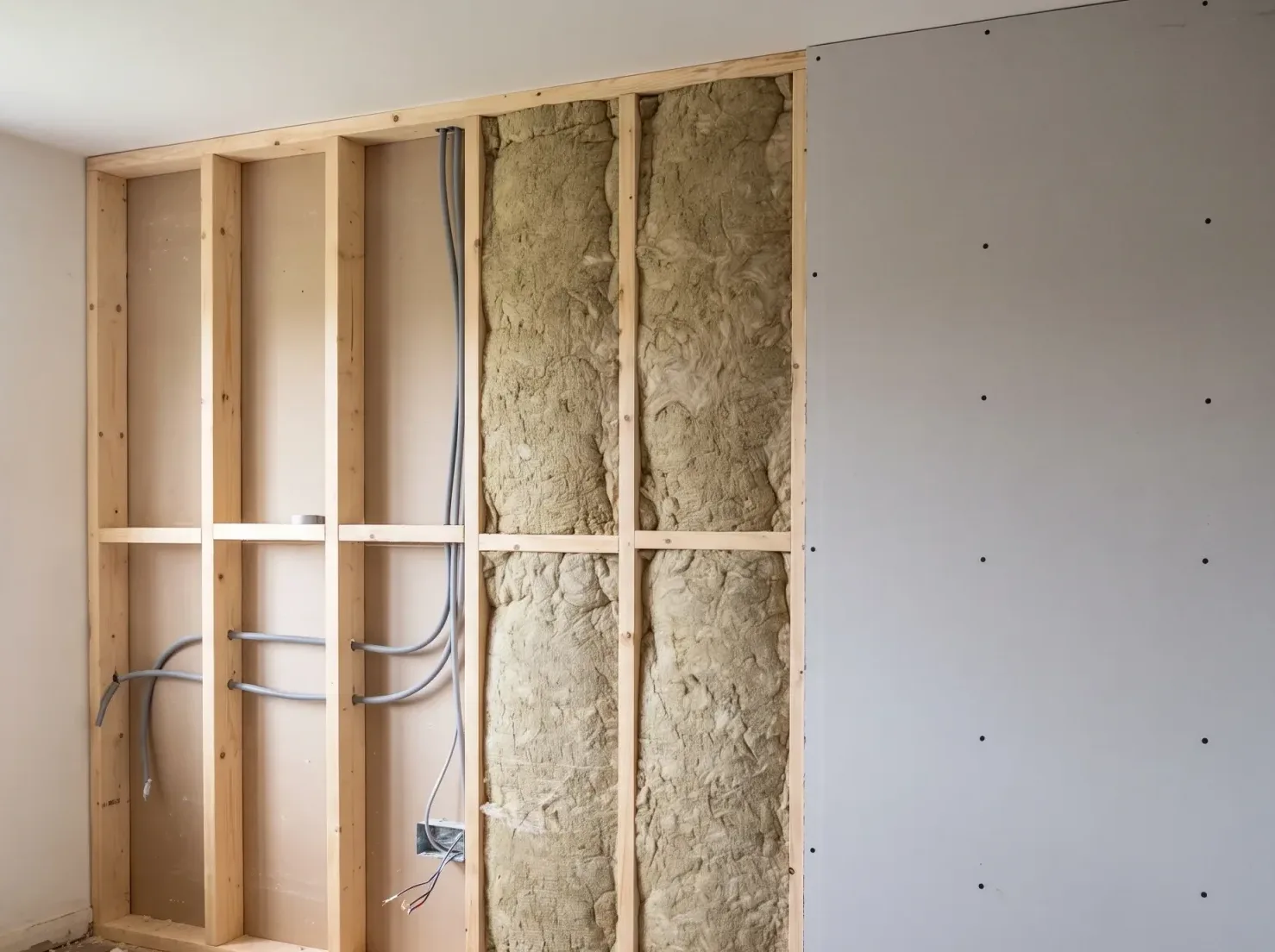
Not every wall is a candidate for external insulation. Experienced installers read a building differently - they assess porosity, surface movement, and moisture behaviour not as a checklist but as a diagnostic conversation with the structure. That accumulated knowledge determines whether a system will bond and breathe correctly over decades, or fail within years.
Reading What the Substrate Says
A wall reveals its history to those who know where to look. Past repairs, salt deposits, damp patches - each signals a condition that must be addressed before any insulation board is fixed. Skipping this step means the system is built on an unstable foundation.
When a Different Approach Fits Better
Sometimes the most valuable skill an experienced installer brings is the judgment to recommend against external insulation entirely. Internal insulation or tanking may serve certain buildings far better - and only genuine expertise, not sales incentive, produces that honest assessment.
Why Clean, Methodical Workmanship Extends External Insulation Lifespan
Every stage of installation builds on the last. When boards are fixed cleanly, joints sealed precisely, and render applied with consistent technique, the result is a unified system rather than a collection of separate components. Shortcuts at any point compromise the whole - a poorly bedded board allows moisture to track behind the insulation layer, undermining thermal performance and accelerating delamination.
Where Precision Matters Most
Clean workmanship is especially critical at transitions: around window reveals, at base tracks, and wherever different materials meet. These junctions are exactly where weather finds its way in if discipline lapses.
- Board fixing must be consistent across the entire surface to prevent movement or differential settlement.
- Joint sealing stops moisture tracking behind the external insulation.
- Even render application prevents stress cracking as the building naturally shifts.
Decades, Not Years
A methodical approach - from substrate preparation through to the final render coat - means the system protects the building envelope and retains its thermal properties long-term, avoiding the disruption and considerable expense of early remedial work.