




How Wall Rendering Protects Your Home
Your home's exterior faces constant pressure - rain, frost, wind, and time. A well-applied render coat does more than improve appearances; it forms a durable skin between the masonry beneath and everything the weather throws at it.
Protection Meets Presentation
Wall rendering sits at the intersection of protection and presentation. It seals porous brickwork and blockwork against moisture penetration, adds a layer of thermal resistance, and gives a building a clean, finished look that lasts. Get it right and the results endure for decades; get it wrong and water finds its way in, cracks spread, and repair bills follow.
What This Article Covers
This guide walks you through how rendering works in practice:
- How the right system shields masonry from weather and moisture
- Why material choice and surface preparation determine long-term performance
- What separates a finish that lasts from one that fails prematurely
What Wall Rendering Actually Does for Your Walls
Masonry walls are porous by nature. Without a protective layer, moisture works its way into the fabric of the structure with every rain shower, freeze-thaw cycle, and damp season - weakening the material from within, encouraging cracks, and accelerating deterioration.
A Seal Between Stone and Weather
A properly applied render coating forms a continuous barrier across the wall face, blocking rainwater at the surface before it can penetrate. This single function has far-reaching consequences for the building beneath.
What That Protection Delivers
The structural benefits accumulate steadily over time:
- Moisture is shed at the surface rather than absorbed deep into the masonry
- Freeze-thaw damage is significantly reduced, slowing progressive cracking
- The underlying brickwork or blockwork retains its integrity for far longer
Wall rendering essentially shields the structure from the gradual punishment the elements would otherwise direct straight at the masonry - extending the working lifespan of the wall considerably.
Weather Protection Through External Wall Rendering
Your home's outer walls face relentless assault from the elements - rain driven by gusts, frost forcing its way into hairline cracks, wind stripping moisture from exposed stone or brick. A well-applied external render stands between the masonry and all of that, acting as a sealed, continuous barrier that keeps water out and structural integrity intact.
When Exposure Demands More
On exposed elevations - north-facing gables, coastal properties, hillside homes - the pressure on bare masonry is considerable. External wall rendering responds to this challenge by forming a tough, weatherproof skin that absorbs driving rain before it can penetrate the substrate beneath.
What the Render Actually Does
A properly specified system protects against:
- Rain penetration - sealing the substrate so moisture cannot soak through to internal walls.
- Frost damage - preventing water from entering cracks where it would expand and fracture masonry.
- Wind erosion - binding loose or ageing surface material behind a durable protective coat.
Without this layer, the cycle of wetting and drying, freezing and thawing, gradually breaks down even solid masonry.
How Wall Rendering Prevents Water Ingress
Masonry is rarely as solid as it appears. Brick, stone, and block contain microscopic pores and hairline joints that act as pathways for moisture - drawing water inward through capillary action whenever rain strikes or humidity rises. Left exposed, those pathways allow water to track deep into the wall structure, leading to damp patches, frost damage, and deteriorating mortar.
Closing Every Entry Point
A correctly applied render system forms a continuous, dense layer across the substrate, bridging joints between masonry units and filling open pores. Moisture can no longer find the micro-channels it needs to migrate inward.
Breathable, Not Merely Waterproof
Good wall rendering doesn't simply block water - it manages it. Breathable render formulations allow water vapour to escape outward while resisting liquid ingress, so trapped moisture never builds up within the wall structure and causes long-term damage.

The Role of Wall Rendering in Thermal Performance
A well-specified render system does more than shield masonry from rain and frost - it actively strengthens the building envelope against heat loss. When applied correctly, certain render formulations add a meaningful layer of thermal resistance to external walls, helping to retain warmth during colder months and maintain cooler interiors when temperatures rise outside.
Choosing the Right System
Not every render performs equally well in this regard. Modern silicone and monocouche systems, combined with appropriate insulating substrates, can significantly enhance a wall's ability to regulate temperature. The choice of system depends on the building's exposure, orientation, and existing construction - factors that experienced renderers assess before specifying any product.
Long-Term Comfort and Efficiency
The result is a home that works harder for its occupants: less draughty, more consistent in temperature, and less reliant on heating to compensate for poorly insulated walls. Proper wall rendering, in this sense, is as much an investment in comfort as it is in protection.
Wall Rendering Materials: From Lime to Silicone
The choice of material defines how well wall rendering performs over time. Not every product suits every building - substrate condition, exposure level, and orientation all dictate which system is appropriate.
Traditional and Modern Choices
Lime render remains the go-to for older, breathable masonry, allowing moisture to move freely without trapping damp behind the surface. Monocouche systems combine base and finish in a single layer, offering durability and a clean factory-mixed colour with minimal maintenance. Silicone render adds flexibility and water repellency to that principle, making it particularly suited to exposed elevations prone to wind-driven rain.
Specialist Systems Like K Rend
Products such as K Rend sit within this silicone-based family but offer refined textures and application methods tailored to specific substrates. Experienced renderers match these systems to each building's material history and exposure conditions - a judgment no product datasheet alone can replace.
Why Surface Preparation Determines How Well Wall Rendering Lasts
Every decision that shapes how well a render system performs is made before the first trowel touches the wall. Substrate condition governs adhesion, and without solid adhesion, even the highest-quality material will crack, delaminate, or trap moisture behind the surface.
What Substrate Assessment Reveals
A competent renderer examines the existing surface for:
- Loose or crumbling material that undermines bonding
- Residual contamination from old coatings or paint
- Moisture that prevents proper curing
- Structural cracking that signals ongoing movement
Preparation Cannot Be Skipped
This groundwork is where the longevity of wall rendering is genuinely decided. Rushing past substrate assessment to save time guarantees premature failure - patches appear, water finds its way in, and costly remedial work follows. The surface must be stable, clean, and compatible with the chosen system before a single coat is applied.
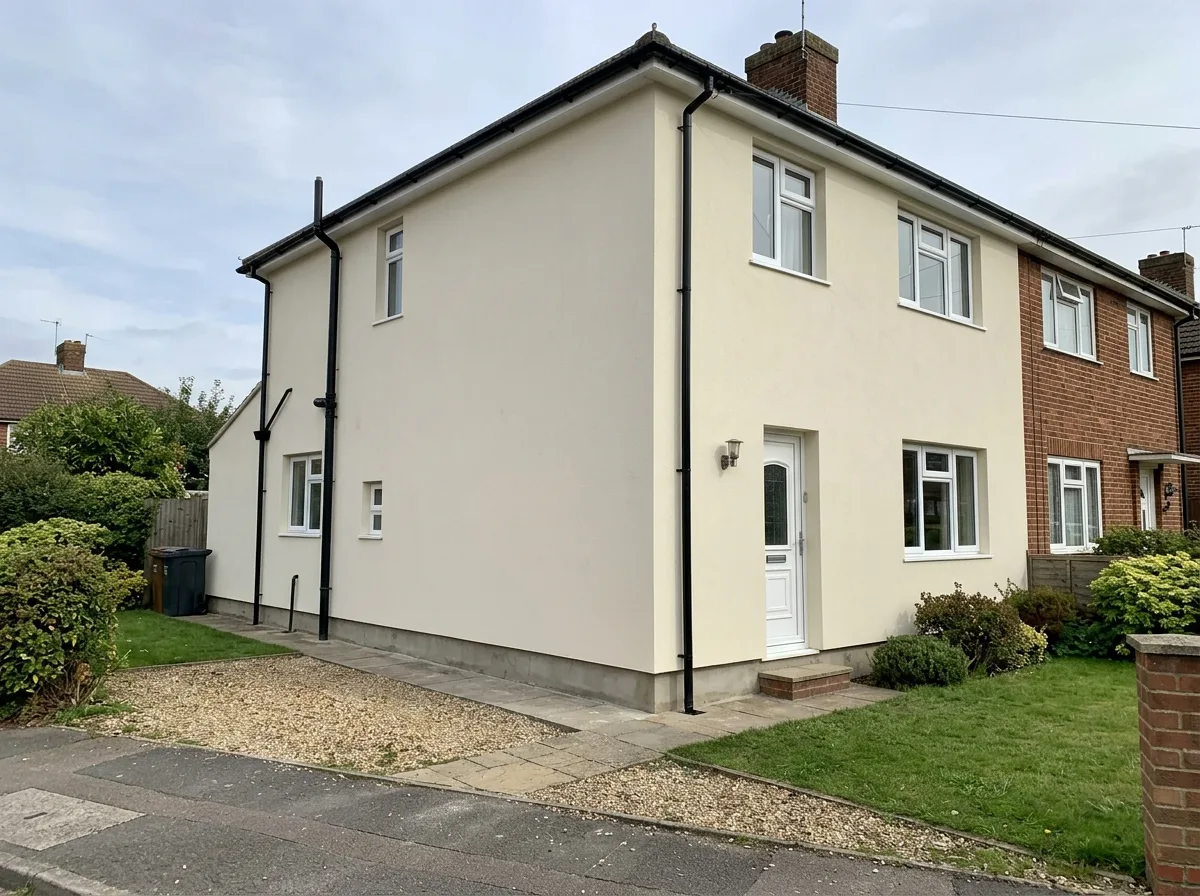
Choosing the Right Wall Rendering System for Your Home's Exposure
Not every render system suits every building. A house facing prevailing winds and driven rain demands something fundamentally different from a sheltered south-facing wall that sees little moisture. Before selecting a system, you need to read the building itself.
Orientation and Exposure Matter
Consider which aspects of your property take the worst of the weather. North-facing and exposed elevations require highly flexible, water-resistant finishes, while sheltered walls may tolerate a lighter specification. Local climate patterns amplify these differences considerably.
Know Your Substrate's History
The material history of your walls is equally decisive. A wall rendering system chosen without understanding what lies beneath - lime, cement, brick, or block - risks adhesion failure and premature cracking. An experienced renderer assesses compatibility before recommending anything:
- Orientation: exposed elevations need greater weather resistance than sheltered ones.
- Climate: coastal or high-rainfall locations demand more robust, flexible systems.
- Substrate: existing material dictates which render bonds correctly and lasts.
Removing Old or Damaged Wall Rendering Before Recoating
Applying new render over a surface that has already failed is one of the most common mistakes in external wall maintenance. Delaminating or cracked material traps moisture beneath any new coat, accelerating deterioration rather than halting it. Before recoating begins, the entire affected area must be fully stripped back to the bare substrate-no exceptions.
What the Substrate Reveals
Once the old material is removed, a proper assessment uncovers cracks, damp patches, salt deposits, and loose masonry that would otherwise remain hidden:
- Hollow or delaminated sections must be removed entirely, not tapped back into place.
- Salt efflorescence signals residual moisture requiring targeted treatment before any new coat is applied.
- Soft or crumbling masonry needs consolidation to provide a stable bonding surface.
Preparation Defines the Outcome
Competent wall rendering starts long before new material is ever mixed. The stripping and assessment stage is precisely where experienced renderers distinguish themselves from those cutting corners-rushed preparation produces surfaces that crack, blister, or delaminate within a short time, making the entire job a costly exercise in repetition.
Matching and Repairing Existing Wall Rendering
Patching a damaged section of render looks straightforward until you step back and see the result. Even skilled tradespeople find that matching an existing finish demands far more than applying the same product-texture, colour, and surface age all work against you. A clumsy repair draws the eye immediately, turning a minor defect into a lasting eyesore.
Reading the Substrate First
Before any patch goes on, the underlying masonry must be properly assessed. Different substrates absorb moisture and move at different rates, so a repair that ignores this reality will crack or delaminate within a season. Substrate compatibility is not a refinement-it is the foundation of a fix that holds.
Replicating Texture and Tone
The true craft of wall rendering repair lies in recreating what is already there:
- Grain size and aggregate type must mirror the original mix precisely
- Application technique-scraped, tyrolean, or hand-finished-directly shapes the final surface character
- New render rarely matches aged colour immediately, so experienced tradespeople factor weathering into their mix decisions

Signs That Your Wall Rendering Is Beginning to Fail
Early warning signs are rarely dramatic. A render system under stress signals its decline gradually - through surface changes that are easy to dismiss but costly to ignore.
Visible Clues Worth Investigating
Look closely for any of the following:
- Hairline or map cracking across the face, indicating substrate movement or shrinkage stress
- Hollow sections that sound drum-like when tapped, showing adhesion has broken down beneath
- Staining or persistent damp patches that reappear after dry spells
- Efflorescence - white crystalline deposits - caused by salts migrating outward with escaping moisture
Why Early Action Matters
Once moisture finds a route through a compromised finish, damage accelerates behind the surface long before it becomes fully visible inside. Prompt assessment of failing wall rendering prevents what starts as a minor crack repair from turning into a full-scale removal and recoat - protecting both the masonry beneath and the building's long-term integrity.
How Professional Wall Rendering Differs From Shortcuts
The difference between lasting work and early failure rarely shows the day the job finishes. It reveals itself months later - when cracks appear, water finds its way in, or sections of coating simply detach.
What Experience Actually Means
Experienced renderers bring judgment no product datasheet can supply. They assess a substrate - its age, porosity, and previous coatings - and choose materials accordingly. Professional wall rendering means knowing why one system suits a particular building while another would fail, based on exposure, orientation, and the structure's full material history.
Where Shortcuts Cut Corners
Rushed jobs skip exactly the steps that determine longevity:
- Inadequate surface preparation leaves contaminants that prevent proper adhesion.
- Mismatched materials create stress points where different expansion rates cause cracking.
- Ignoring substrate condition traps moisture beneath the coating, accelerating failure.
The result looks identical at handover. The difference emerges when the weather does its work.
How Long Properly Applied Wall Rendering Should Last
The difference between a finish that endures and one that fails prematurely is decided long before the first coat is applied. Substrate preparation, material selection, and application technique each play a defining role - and when all three align, the result is a surface that weathers exposure gracefully rather than deteriorating within a few seasons.
What Shortens a Render's Life
Shortcuts at any stage compound over time:
- Poor preparation causes adhesion failure, allowing moisture to creep behind the coating.
- Incompatible materials crack as the substrate and render move at different rates.
- Rushed application leaves weak spots that water finds quickly.
When Everything Is Done Right
Quality wall rendering, carried out with the right materials and genuine skill, produces a finish that protects masonry for decades rather than years. That is not a bold claim - it is simply what happens when preparation is thorough, the system suits the building, and the work is done by someone who knows the difference.

FAQ - Frequently asked questions
What is the main purpose of external wall rendering?
External wall rendering forms a protective barrier that seals masonry walls against moisture penetration, reduces frost damage, and protects against wind erosion. Beyond structural protection, it also improves a building's appearance and provides a finished look that lasts for decades when properly applied.
Why is wall rendering particularly important for exposed properties?
Exposed buildings - such as north-facing gables, coastal properties, or hillside homes - face considerable pressure from the elements including driving rain, frost, and wind. Rendering acts as a tough, weatherproof skin that absorbs these environmental stresses before water can penetrate the masonry beneath and cause damage.
How does rendering protect the underlying masonry structure?
Rendering works by shedding rainwater at the surface rather than allowing it to soak deep into the masonry. This prevents freeze-thaw damage from occurring when water expands in cracks, and it allows the underlying brickwork or blockwork to retain its integrity considerably longer than unprotected walls would.